Facts about Reptiles
Reptiles are found in every continent except Antarctica.
Reptiles have existed for more than 300 million years.
There are more than 8000 reptile species in the world.
Reptiles are lizards, snakes, turtles, and crocodiles as well as the lesser-known groups of tuataras and amphisbaenians.
Reptiles have scales or horny plates that cover their body.
You will often find reptiles lying in the sun on rocks and logs.
They can rarely breath underwater.
Reptiles are called cold-blooded because they can't regulate their own body temperature. Their body temperature is dependent on the external temperature.
Most reptiles lay eggs which have leathery shells that are resistant to drying.
As compared to mammals and birds, reptiles have neither fur nor feathers.
The extinct dinosaurs were reptiles.
Reptiles fertilize their eggs internally and don’t use water as a medium in which to lay eggs.
A majority of reptiles have a three-chambered heart.
Some reptiles produce live young.
In most reptile species, the young are independent from the moment they've hatched.
The longest snake is the reticulated python and the heaviest is the anaconda.Reptiles do not form a distinct evolutionary group as mammals and birds do. The Class Reptilia consists of four orders, which are very different from each other. For instance, lizards are more closely related to birds than to turtles. Crocodilia refer to crocodiles and alligators. The order Rhynchocephalia contains only two species known as tuataras, which are native to New Zealand. Squamata refers to lizards, snakes and other similar creatures. All turtle species are included in the Testudines order.
Komodo dragon is the largest living lizard.
In very hot or dry climates, some reptiles will estivate, or go into a torpor.
If a snake is born with two heads, its both heads fight each other for food.
They have waterproof skin.
A crocodile has an ability to grow new teeth to replace the old teeth.
An interesting fact is that a crocodile cannot stick out its tongue.
The Egyptians used crocodile dung as the first contraceptive in human history in 2000 B.C.
Some snakes such as anaconda and reticulated python can survive for months before eating.
The earth is inhabited by at least 250 species of turtles, 25 species of crocodilians, 5,500 species of snakes and 3,000 species of lizards.
Reptiles have more advanced circulatory, respiratory, excretory, and nervous systems than the amphibians.
The largest reptile is the saltwater crocodile, which grows up to 23 feet in length.
Some snakes are poisonous, or venomous. They have fangs, which bite into their prey and inject poison into it.
Once upon a time, snakes had legs and a new discovery has revealed that at least one had hips, too. The newly discovered snake species, Najash rionegrina, lived around 90 million years ago in Patagonia, Argentina.
Lorne Greene had one of his nipples bitten off by an alligator while he was hosting ‘Lorne Green’s Wild Kingdom’.
Many giant tortoises (Geochelone) have lived for 120 to 150 years.
Certain lizards, such as the chameleon, can change colors to blend into their environment. This camouflages them and gives them protection from the predators.
There are more venomous snakes than non-venomous snakes in the Australian continent.
The basilisk lizards can run across the surface of water without sinking.
Most snake species can dislocate their jaw, allowing them to swallow prey much larger than themselves.
Snakes don't have limbs. They move by slithering along the ground.
Most reptiles are carnivorous and eat insects, other reptiles, and small animals.
A few reptiles are herbivorous, eating plants.
Interestingly, turtles were present on earth before the dinosaurs.
Although reptiles breathe through lungs, certain reptiles can also absorb oxygen in water through membranes in their mouth.
Amazingly, the distance between an alligator’s eyes, in inches, is directly proportional to the length of the alligator in feet.
About Me
Boa.jpg)
- iReptiles
- This site is for educational purposes only, and to built a reptile community for all the reptile lovers out there. I also do reptile rescue, reptile sitting (short and long term), and reptile extraction, lol but it happens. I'm in San Diego, and if you need to give up your reptile, for whatever reason, give me a call at 619-971-6672, and my name is Cisko.
Showing posts with label reptile. Show all posts
Showing posts with label reptile. Show all posts
Wednesday, November 11, 2009


Tuesday, November 10, 2009
Pastel Boa (reptile)


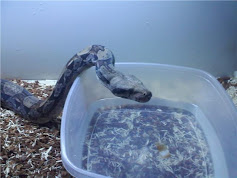
 This Pastel Boa is ready to be re-homed. She is like 50in. and has some very beautiful light colored saddles, with a nice bright Red Tail. She is very Docile, and has a great temperment. If interested, I'm in San Diego, so if your local, we can meet.


Thursday, November 5, 2009
About Boas from Mexico (Boa constrictor imperator)

Habitat for Boa in Mexico includes desert and semi-desert scrub, coastal mangrove swamps, tropical and sub-tropical forest and cloud-forest and remnant northern boreal forest which persist in sky islands above the deserts in the north of the country, at altitudes of sea level to around 5000’ above sea level. The subtle variety in color and pattern of Mexican imperator may confuse locality-oriented keepers and breeders and make locality of origin nearly impossible to accurately determine from casual observation alone.
A general description of Mexico boas could be; a small to moderately large Boa from 1 to about 2.6 meters in length. Mexican boas are generally more heavily patterned than many localities of Boa, or have a high pattern density (HPD) and are marked with well-defined, heavy black or dark-brown dorsal saddles numbering 24-31. Dorsal saddles usually have numerous inclusions and are connected in a continuous or near continuous line. Background color can be tan, chocolate, orange, grey, charcoal, silver or any combination of those colors. Tail or caudal markings vary from entirely black, brown or orange to brick and only sometimes a dull red.
For evolutionary reasons we will likely never understand practically all boas from Mexico will at some time display a startling and imposing defensive behaviour. This display consists of a tightening and bowing of the body, rearing and/or flattening of the head and coiling or writhing of the tail. If these warning signs are ignored the boa will usually take in a body-full of air and emit a loud hissing sound from the epi-glottis equal to the very best any bullsnake or pinesnake can deliver. If this performance still fails to make the threat go away, they will strike. A patient keeper, proper caging and gentle handling will usually result in a very handleable if not completely docile pet.
Quick facts
Photo Bytes
Class: Reptilia (Reptiles)
Order: Squamata
Family: Boidae
Subfamilies:
• Boinae
• Erycinae
Genera: 11
Species: 41
Size: longest—anaconda Eunectes murinus, up to 30 feet (9 meters); shortest—Arabian sand boa Eryx jayakari and elegant sand boa Eryx elegans, both up to 16 inches (40 centimeters)
Weight: heaviest—anaconda, up to 280 pounds (127 kilograms)
Life span: up to 35 years
Number of young: 4 to 40, depending on species
Gestation: 50 to 180 days, depending on species
Size at birth: typically 6 to 24 inches (15 to 61 centimeters), depending on species; up to 2 feet (0.6 meters) from large anaconda mothers
Age of maturity: 3 years
Conservation status: Round Island keel-scaled boa Casarea dussumieri, Madagascar ground boa Acrantophis madagascariensis, and Madagascar tree boa Sanzinia madagascariensis are some of the endangered boas; many others are vulnerable.
Fun facts
• Boa "a large serpent” in Latin.
• Female anacondas grow much larger than the males.
• Boa constrictors like to eat bats! They catch them by hanging from tree branches or the mouths of caves and knocking the bats out of the air as they fly by.
• When some boa species want to mate, several males coil around a female in a ball and wrestle with one another for up to two weeks before one wins—or the female makes a choice.
• The rosy boa Lichanura trivirgata and the rubber boa Charina bottae are the only two species of boas native to the United States.
See them
Range: western North America, Central America, South America, Africa, Madagascar, western Asia, and Pacific Islands
Habitat: rain forests, swamps, woodlands, grasslands, savannas, and semidesert scrublands
.
Boas, pythons, and anacondas: What’s the difference?
Because boa constrictors, reticulated pythons, and anacondas are some of the biggest snakes in the world, many people get confused about which is which. The first thing to note is that the anaconda is a species of boa, not a separate type of snake. That leaves two groups, the boas and the pythons. These snakes have some things in common: they are constrictors, killing their prey by wrapping around it and suffocating it, and they are considered primitive snakes with two lungs (most snakes only have one) and remnants of hind legs and pelvic bones. But they have differences, too. Pythons have one more bone in their heads than boas do and some additional teeth, and pythons are found in the Old World (Africa, Asia, Australia) while boas live in both the Old World and the New World (North, Central, and South America). One of the biggest differences is that pythons lay eggs while boas give birth to live young.
Putting the squeeze on dinner
Boas are constrictors, meaning that they grab their prey with their teeth, then quickly wrap their coiled bodies around the prey and squeeze. But they don’t actually crush the prey and break its bones. They just squeeze tightly so that the prey animal’s lungs cannot expand and it suffocates. The snake then begins the leisurely process of unhinging its jaw and swallowing the prey whole, usually headfirst. Rhythmic muscular contractions pull the prey down the snake’s throat and into its stomach. How does the snake breathe while its mouth is full? It has a special tube in the bottom of its mouth that remains open to one side to take in air.
A hot meal
Boas are ambush hunters. They remain still and hidden until a possible meal comes close, then strike forward quickly to catch it. Boas flick their tongues in and out to catch scent particles from the air. This way of "smelling” helps them find their prey. Most species also have special temperature-sensitive scales around their mouths, with lots of nerve endings that can sense the heat of a nearby animal. This allows them to find prey even in the dark or among dense foliage. The tree boas have "pits,” or holes, along their mouths that do the same thing, like their relatives the pythons do. Depending on the size of the snake, boas may eat rodents, birds, lizards, frogs, and small to medium-sized mammals like opossums, monkeys, pigs, or deer. Some anacondas have been known to eat animals as large as a young tapir or even a caiman. At the San Diego Zoo, our boas eat rodents and rabbits that have been killed for them.
A snake that gives birth
Boas do not lay eggs. Instead, they give birth to live young. The young are attached to a yolk sac and surrounded by a clear membrane, not a shell, as they develop in their mother’s body. That way they are kept at a fairly constant temperature and are protected from predators. When the young are ready to be born, they are pushed out an opening called the cloaca. They are still surrounded by the protective membrane and must break it open. Then they are on their own to start protecting themselves (usually by hiding at first) and to find food. Most are smaller versions of the adults and instinctively know how to survive on their own.
"Walk” a straight line
Because of the large size many boas can reach, they move by traveling forward in a straight line, which is known as "rectilinear progression.” This is accomplished by stiffening the ribs to provide support, then lifting a set of ventral (on the belly) scales and moving them forward so the loose ends grip the surface, pushing the snake ahead. This type of movement works on the ground as well as in trees, and boas can even climb smooth surfaces. They can’t move very fast, though, only about 1 mile per hour (1.6 kilometers per hour) on open ground. But since they don’t have to chase their food, they don’t need to travel quickly.
Not the bad guys
Boas often appear in movies and stories that take place in the jungle, usually as the "villain” sliding menacingly through the trees. That’s probably because these big snakes make a big impression! But boas are usually pretty quiet and calm and don’t deserve their nasty reputation. They are not venomous, and many do not live in jungles. Boas are found in a variety of habitats, including open woodlands—like the rainbow boa Epicrates cenchria—and rocky, semi-desert scrublands—like the Egyptian sand boa Eryx colubrinus. The ones that live in dry environments usually hang out in rock crevices or in underground burrows made by other animals. The ones that live in forests blend into the leaf litter on the ground to stay hidden. All in all, a boa would rather avoid people than go looking for trouble!
Photo Bytes
Class: Reptilia (Reptiles)
Order: Squamata
Family: Boidae
Subfamilies:
• Boinae
• Erycinae
Genera: 11
Species: 41
Size: longest—anaconda Eunectes murinus, up to 30 feet (9 meters); shortest—Arabian sand boa Eryx jayakari and elegant sand boa Eryx elegans, both up to 16 inches (40 centimeters)
Weight: heaviest—anaconda, up to 280 pounds (127 kilograms)
Life span: up to 35 years
Number of young: 4 to 40, depending on species
Gestation: 50 to 180 days, depending on species
Size at birth: typically 6 to 24 inches (15 to 61 centimeters), depending on species; up to 2 feet (0.6 meters) from large anaconda mothers
Age of maturity: 3 years
Conservation status: Round Island keel-scaled boa Casarea dussumieri, Madagascar ground boa Acrantophis madagascariensis, and Madagascar tree boa Sanzinia madagascariensis are some of the endangered boas; many others are vulnerable.
Fun facts
• Boa "a large serpent” in Latin.
• Female anacondas grow much larger than the males.
• Boa constrictors like to eat bats! They catch them by hanging from tree branches or the mouths of caves and knocking the bats out of the air as they fly by.
• When some boa species want to mate, several males coil around a female in a ball and wrestle with one another for up to two weeks before one wins—or the female makes a choice.
• The rosy boa Lichanura trivirgata and the rubber boa Charina bottae are the only two species of boas native to the United States.
See them
Range: western North America, Central America, South America, Africa, Madagascar, western Asia, and Pacific Islands
Habitat: rain forests, swamps, woodlands, grasslands, savannas, and semidesert scrublands
.
Boas, pythons, and anacondas: What’s the difference?
Because boa constrictors, reticulated pythons, and anacondas are some of the biggest snakes in the world, many people get confused about which is which. The first thing to note is that the anaconda is a species of boa, not a separate type of snake. That leaves two groups, the boas and the pythons. These snakes have some things in common: they are constrictors, killing their prey by wrapping around it and suffocating it, and they are considered primitive snakes with two lungs (most snakes only have one) and remnants of hind legs and pelvic bones. But they have differences, too. Pythons have one more bone in their heads than boas do and some additional teeth, and pythons are found in the Old World (Africa, Asia, Australia) while boas live in both the Old World and the New World (North, Central, and South America). One of the biggest differences is that pythons lay eggs while boas give birth to live young.
Putting the squeeze on dinner
Boas are constrictors, meaning that they grab their prey with their teeth, then quickly wrap their coiled bodies around the prey and squeeze. But they don’t actually crush the prey and break its bones. They just squeeze tightly so that the prey animal’s lungs cannot expand and it suffocates. The snake then begins the leisurely process of unhinging its jaw and swallowing the prey whole, usually headfirst. Rhythmic muscular contractions pull the prey down the snake’s throat and into its stomach. How does the snake breathe while its mouth is full? It has a special tube in the bottom of its mouth that remains open to one side to take in air.
A hot meal
Boas are ambush hunters. They remain still and hidden until a possible meal comes close, then strike forward quickly to catch it. Boas flick their tongues in and out to catch scent particles from the air. This way of "smelling” helps them find their prey. Most species also have special temperature-sensitive scales around their mouths, with lots of nerve endings that can sense the heat of a nearby animal. This allows them to find prey even in the dark or among dense foliage. The tree boas have "pits,” or holes, along their mouths that do the same thing, like their relatives the pythons do. Depending on the size of the snake, boas may eat rodents, birds, lizards, frogs, and small to medium-sized mammals like opossums, monkeys, pigs, or deer. Some anacondas have been known to eat animals as large as a young tapir or even a caiman. At the San Diego Zoo, our boas eat rodents and rabbits that have been killed for them.
A snake that gives birth
Boas do not lay eggs. Instead, they give birth to live young. The young are attached to a yolk sac and surrounded by a clear membrane, not a shell, as they develop in their mother’s body. That way they are kept at a fairly constant temperature and are protected from predators. When the young are ready to be born, they are pushed out an opening called the cloaca. They are still surrounded by the protective membrane and must break it open. Then they are on their own to start protecting themselves (usually by hiding at first) and to find food. Most are smaller versions of the adults and instinctively know how to survive on their own.
"Walk” a straight line
Because of the large size many boas can reach, they move by traveling forward in a straight line, which is known as "rectilinear progression.” This is accomplished by stiffening the ribs to provide support, then lifting a set of ventral (on the belly) scales and moving them forward so the loose ends grip the surface, pushing the snake ahead. This type of movement works on the ground as well as in trees, and boas can even climb smooth surfaces. They can’t move very fast, though, only about 1 mile per hour (1.6 kilometers per hour) on open ground. But since they don’t have to chase their food, they don’t need to travel quickly.
Not the bad guys
Boas often appear in movies and stories that take place in the jungle, usually as the "villain” sliding menacingly through the trees. That’s probably because these big snakes make a big impression! But boas are usually pretty quiet and calm and don’t deserve their nasty reputation. They are not venomous, and many do not live in jungles. Boas are found in a variety of habitats, including open woodlands—like the rainbow boa Epicrates cenchria—and rocky, semi-desert scrublands—like the Egyptian sand boa Eryx colubrinus. The ones that live in dry environments usually hang out in rock crevices or in underground burrows made by other animals. The ones that live in forests blend into the leaf litter on the ground to stay hidden. All in all, a boa would rather avoid people than go looking for trouble!
Sunday, November 1, 2009
Western Pennsylvania Reptile Expo
The Western Pennsylvania Reptile Expo is this Sunday, August 2nd and then again on October 18th and December 6th, 2009 at the Mars VFW Hall, located at 323 Mars-Valencia Road, Mars, PA 16046. The Expo is from 9:00 a.m. until 4:00 p.m. Cost for admission is $4.00 per person and children 5 years old or younger are admitted for free. More info can be found at parepexpo.com or by calling (724)991-6658. At the Expo you can see and select from thousands of reptiles, amphibians, arachnids, feeder foods, habitats, novelty items and more. All...
Subscribe to:
Posts (Atom)